
As many as 15,000-20,000 frontline retail jobs have reportedly been rationalised, with further cuts feared.
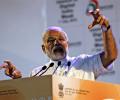
Prime Minister Narendra Modi, at the India Mobile Congress (IMC) 2026, articulated a vision for India's communications sector, emphasizing a global framework to combat cyber frauds and deepfakes. He called for India to become a hub for innovation and product development for the world. Industry leaders lauded his vision, highlighting India's robust digital infrastructure and its journey towards becoming a global technology leader, with a focus on trust, security, and responsible innovation.

Bajaj Finserv announced a strategic initiative to invest up to Rs 2,000 crore in artificial intelligence and technology-led startups over the next five years, along with a collaboration with IIT-Bombay for joint research.

US President Donald Trump has threatened the European Union with "very heavy tariffs" if he perceives their actions as hostile, specifically in response to Canada's efforts to deepen economic and strategic ties with the EU. This comes as European Commission President Ursula von der Leyen invited Canada to become the EU's first "associate member" to strengthen resilience amid global trade uncertainties and US trade policies.

India is caught in a no-man's land, not cheap enough for value investors to pile in but not growing fast enough to attract growth investors either, asserts Akash Prakash.

IBM India and South Asia MD Sandip Patel stated that India is at a defining moment with a unique opportunity to shape exponential technologies like artificial intelligence, emphasizing that "when India builds, it builds for billions," leading to scalable impact. Speaking at the IBM Think 2026 event, Patel highlighted that the AI revolution is still in its early stages, requiring enterprises to redesign their operations around agents, real-time data, automation, hybrid architecture, and trust. He also introduced the concept of "digital swaraj" or sovereignty in the Indian context, stressing the importance of control over operating environments, data, technology, and AI execution. IBM also announced an MoU with MeitY Startup Hub to accelerate India's deep tech innovation and startup ecosystem, providing startups access to IBM's technology expertise and platforms like watsonx and Sovereign Core.

'Before the Tiger Shroff incident, the gang announced that it had 70,000 shooters. Why say that? Because you want to give a message to the people who are likely to be extorted.'

FATF Vice-President Vivek Aggarwal has urged the fintech industry to increase investments to combat emerging threats from AI, scam compounds, virtual digital assets, and quantum computing. He warned that these technological challenges pose a significant risk to India's rapid growth in the fintech sector, highlighting a current lack of adequate investment and risk realisation within the industry.

The University of Liverpool and the Indian Institute of Science (IISc) have established a joint seed fund to promote research and innovation collaborations in areas such as AI, biomedicine, quantum technology, and space.

Researchers at Birla Institute of Technology-Mesra have developed a brain-computer interface (BCI) system that translates brain signals into real-time wheelchair navigation commands using a hybrid quantum-enhanced deep learning model.

Finance Minister Nirmala Sitharaman criticised commentators who express pessimism about India's demographic dividend, asserting that the country's youth are actively driving economic growth and innovation. She also highlighted the dual nature of AI and the need for robust safeguards in emerging technologies like quantum computing to balance innovation with safety.

Prime Minister Narendra Modi has urged for a global framework to combat cross-border cyber frauds and deepfakes, highlighting the need for governments, tech companies, telecom operators, and financial institutions to collaborate. Speaking at the India Mobile Congress 2026, Modi stressed that technology thrives on trust and that India is ready to share its expertise in tackling cyber threats. He also noted the rapid expansion of 5G and the success of digital governance initiatives like Direct Benefit Transfer.

Reserve Bank of India (RBI) Deputy Governor Rohit Jain has warned that financial institutions' increasing reliance on a small number of common technology providers, including cloud and AI model providers, could create a new source of systemic risk. He highlighted 'speed, concentration and opacity' as key risks, noting that a disruption at one provider could rapidly spread across multiple institutions, amplifying existing financial risks.

'It's A Cat And Mouse Game.'

Prime Minister Narendra Modi has introduced a 'Sapta Dhara' (seven-stream) reform framework, aiming to propel India into a developed nation by 2047. This comprehensive plan focuses on key sectors including manufacturing, agro-food processing, technology, logistics, defence, green and blue economy, and soft power, leveraging the nation's youth potential.

Researchers at IIT Bombay have proposed a new test, dynamical fidelity susceptibility (DFS), to measure the 'quantumness' of gravity, suggesting that conventional entanglement-based tests may be insufficient.
Finance Minister Nirmala Sitharaman has urged the Reserve Bank of India to accelerate its central bank digital currency initiatives, emphasising the need to sharpen capabilities with the digital rupee amidst rapid advancements in tokenisation, agentic AI, and quantum computing. She also highlighted critical concerns regarding cybersecurity, warning that autonomous AI systems are evolving rapidly and require robust safeguards. Sitharaman proposed a federated industry platform to give India's technology ecosystem a collective international voice.

Mercedes-Benz Research and Development India (MBRDI) has partnered with the Indian Institute of Technology (IIT) Delhi for joint research programmes focused on the future of mobility and engineering systems.

Prime Minister Narendra Modi has called upon India's youth to dream big, assuring them of government support and resources, including a Rs 1 lakh crore Innovation Fund, to bolster the country's burgeoning startup ecosystem and drive its journey towards becoming a developed nation.

BRICS members have expressed 'serious concerns' over the unilateral imposition of trade and finance-related measures, including higher tariffs and non-tariff barriers, stating these actions distort trade and are inconsistent with WTO rules. The grouping also highlighted elevated risks to the global economic outlook due to geopolitical tensions, trade fragmentation, and protectionism.
Broadband technology firm GX Group is set to commence manufacturing operations at its advanced photonics facility in India from December, investing Rs 500 crore. This initiative aims to strengthen domestic manufacturing, create skilled jobs, and reduce dependence on imported optical components crucial for high-speed data networks and AI data centres.

Meesho, a value-commerce platform targeting middle- and lower-income geographies, is poised for significant growth driven by its asset-light model and low fulfilment costs, but faces intense competition from e-commerce giants and high valuations.
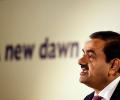
Gautam Adani and family have reclaimed the top spot on India's rich list, surpassing Mukesh Ambani, as the nation's billionaire population reached a record 391, according to the M3M Hurun India Rich List.
Union Minister Ashwini Vaishnaw chaired a meeting focusing on Artificial Intelligence, emerging technologies, and electronics hardware manufacturing, highlighting India's progress and future roadmap in these sectors.
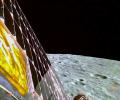
NASA has invited ISRO to join its ambitious Moon Base mission to establish a permanent lunar outpost near the Moon's South Pole, aiming for scientific discoveries and future deep space exploration. This invitation follows discussions at the Civil Space Joint Working Group meeting in Bengaluru, where both nations also advanced cooperation under the Artemis Accords and the TRUST initiative.
Indigenous smartphone brand Ai+ has announced a Rs 100 crore bug bounty program over five years, inviting independent researchers to identify and address security vulnerabilities. This initiative, named Project Trust+, aims to foster a collaborative environment with the tech community to enhance the safety and resilience of Ai+ products, reflecting the company's commitment to transparent and collaborative security development.

A top Swiss official has emphasised the growing importance of science and technology in international affairs, leading Switzerland to prioritise anticipatory science diplomacy in its foreign policy. Collaboration with India reflects a shared vision between two global innovation leaders.

Computer-based testing can make the examination more secure and transparent. Ensuring equal opportunities to prepare will make it fair as well. India needs both, suggests Dibyasree Ganguly.

DIIs invested $22.8 billion in Indian equities in Q2CY26.

The Biotechnology Industry Research Assistance Council (BIRAC) has chosen seven to eight biotechnology startups as the initial group to receive funding from the government's ~1 trillion Research, Development and Innovation (RDI) Fund, with an average investment of approximately ~25 crore per startup.

Prime Minister Narendra Modi celebrated 11 years of the Digital India initiative, highlighting its role in redefining governance, empowering citizens, and accelerating all-round development. He emphasised its impact on digital payments, direct benefit transfers, and expanding digital public infrastructure, making technology a powerful instrument for 'Ease of Living' across India, including tier-2 and tier-3 cities.

Notwithstanding the economic complementarities and the host of agreements for deepening economic relation on a host of areas, both sides share common viewpoints on the foreign policy domain and seek common grounds to serve as a counterweight to China, notes Dr Rajaram Panda.
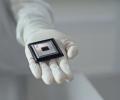
With Google announcing the milestone of Willow - a state-of-the-art quantum computing chip that can solve complex problems in under five minutes, a computation so complex it would have taken a supercomputer around 10 septillion (10^25) years to complete - tech experts believe this breakthrough could impact artificial intelligence (AI), particularly by making it more accessible to the masses. However, industry players caution that it may take several years for this innovation to become commercially viable.
The US Department of Transportation has proposed new rules to reverse a five-decade ban on overland supersonic flights, driven by advancements in quiet supersonic technology like NASA's X-59 aircraft. This move aims to enable a new era of faster air travel while addressing noise concerns, with final rules expected by mid-2027.

St Stephen's College is set to embrace artificial intelligence (AI) under its newly-appointed principal, Susan Elias, the first woman to hold the position in the college's 145-year history. Elias aims to equip students with AI and quantum computing skills, introducing certification courses for students and alumni.

Vietnam is an emerging regional power and a closer relationship with Hanoi is closely aligned with Prime Minister Narendra Modi's Act East Policy, points out Dr Rajaram Panda.

Uber is set to establish its first data centre in India in partnership with the Adani Group, the company's CEO Dara Khosrowshahi said.
Nasscom's newly appointed Chairman, Srikanth Velamakanni, outlines key priorities including restoring revenue growth in IT firms and promoting the role of artificial intelligence and other technologies in companies.
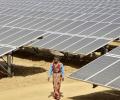
Researchers at the Central University of Jharkhand have developed an eco-friendly solar cell using dye extracted from the Mirabilis jalapa flower, demonstrating the potential of natural, non-toxic materials for solar energy applications.

India is set to take its first steps towards its own human space flight when the uncrewed Gaganyaan mission soars to the skies later this year. Private players in the space sector are also gearing up for launching satellites on home-built rockets.
